Client
Zoneit Cloud
Year
2023
Industry
Cloud, Hosting
Stacks
Teammates

Amir Mohammadi
Product Designer

Morteza Shojaee
Product Manager

Development Team
DevOps, Software Engineers
Owned By Designers
Branding & Interface
Research & Wireframing
Design System
UX Design and Usability Testing
Handoff & Documentation
Co-owned with PM
Product Strategy
Feature Prioritization
Competitor Analysis
Problem
1.
We knew exactly what we wanted to build: the key features and value propositions.
2.
Stakeholders had deep knowledge of this market, so their hypotheses and assumptions were low-risk but high-value.
3.
We had limited time and budget.
4.
Our product’s value lies at the infrastructure level, so some design solutions might not be feasible to build.
Step 1
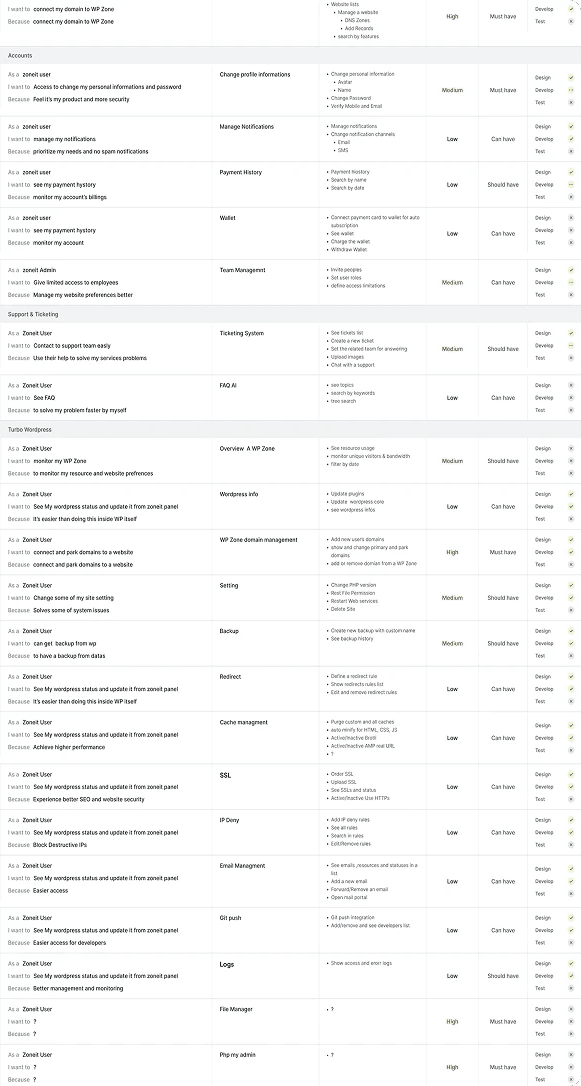
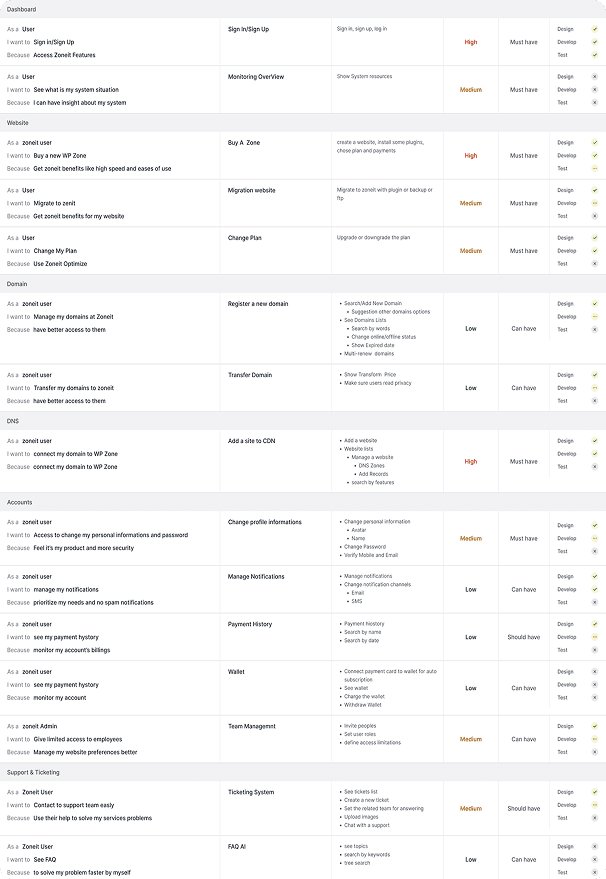
When I joined the project, the stakeholders had already put together a list of features, but it lacked design insights. I worked with the PM and stakeholders to complete the user stories and add new features.

I wanted to understand how they solved the same problems, how they optimized their flows, and what their value propositions were.


Step 2


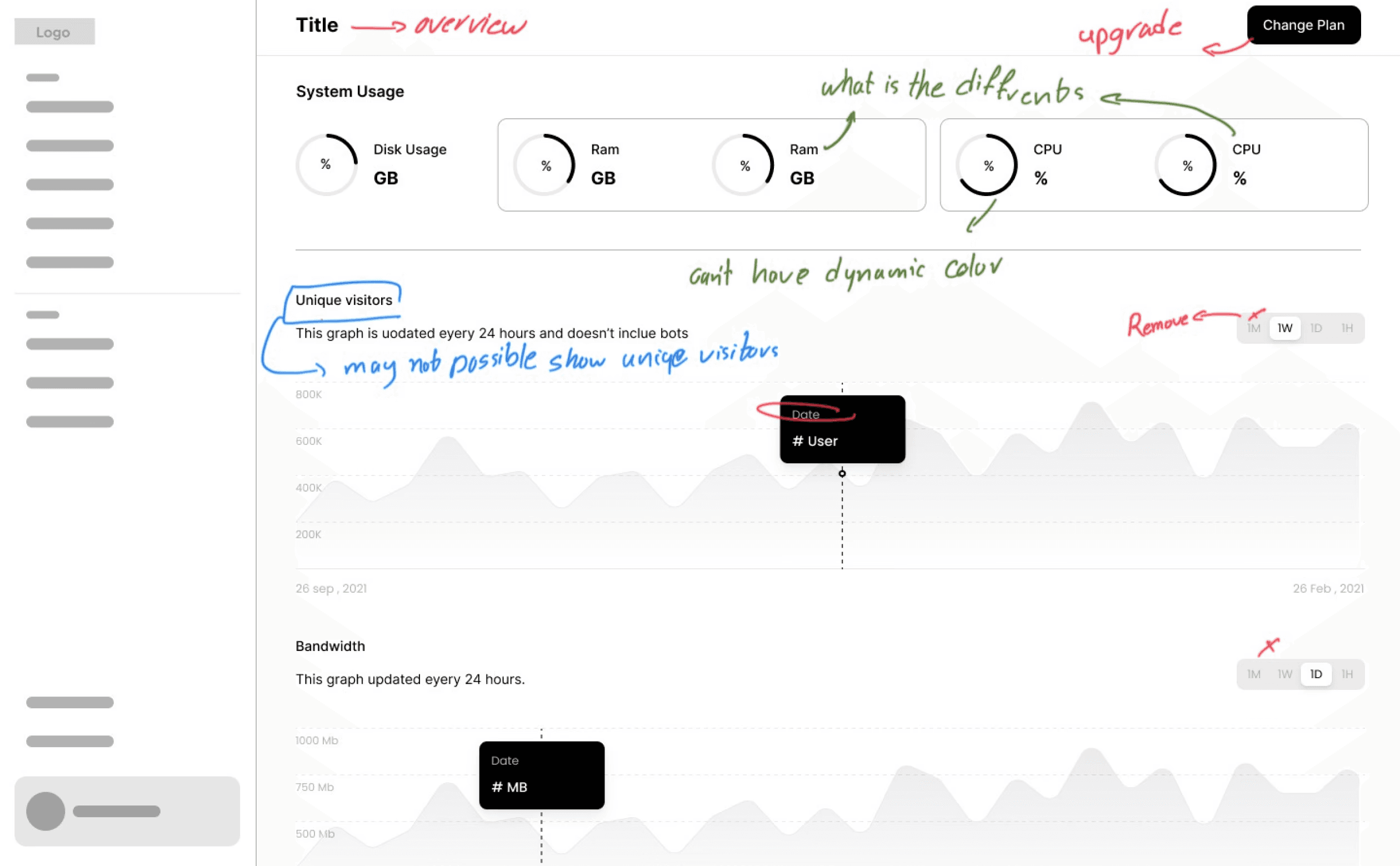


Step 3
While designing the high-fidelity mockups, we constantly gathered feedback from stakeholders, developers, and potential users. I tried to understand the need behind their words and bring it into my solutions.


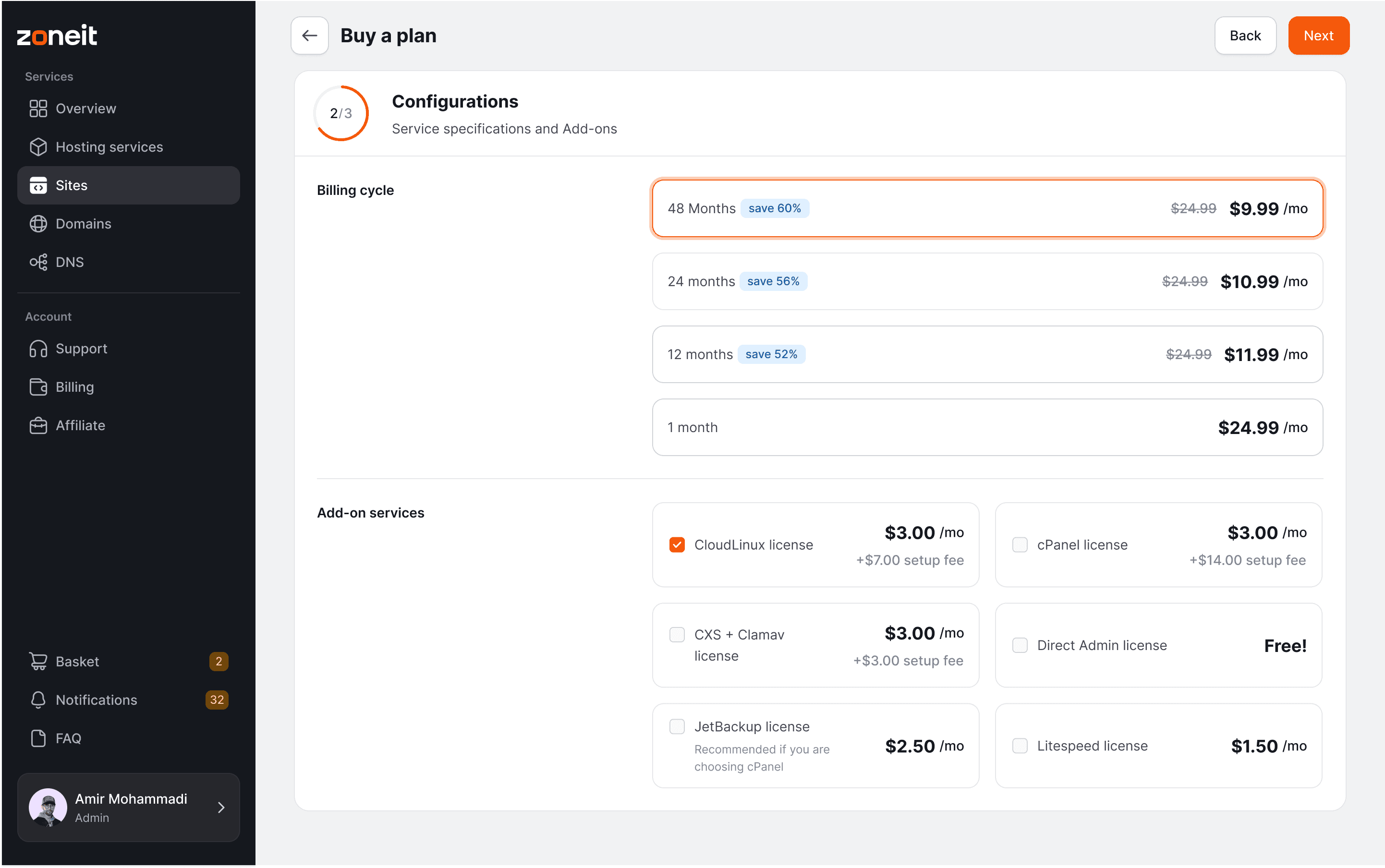


Key Flow
This is our golden flow, so I focused on improving it through usability testing sessions.


Step 4
Once the golden flows’ UI design was finished, it was time to improve and optimize them.
I skipped low-fidelity testing because, in this case, a high-fidelity prototype let users experience the real product. Designing the high-fidelity version didn’t take much extra effort, especially for critical user flows.


After finishing the golden flows’ UI design, I moved on to improving and optimizing them.
1.
Some users didn’t realize the cards were selectable

I added radio buttons to the cards
2.
Users weren’t sure which plan suited them.

I added a slider and a help icon
3.
Plus more design changes to the basket, payment, domain, and more.
After testing the new design, several metrics improved
Time on task
70.5
76
+5.5
Error Rate
avg 3
avg 2
1
SUS
70.5
76
+5.5


Results

Being a generalist designer isn’t a bad thing.
It helps you solve many bottlenecks. Versatility lets you take on many kinds of tasks, which opens up more room for creativity and innovation and makes it easier to adapt to different challenges.
Document from the start of the project.
It matters most when new members join the team. Documenting from the outset supports clarity, communication, alignment, handoff, maintenance, and risk mitigation, and keeps design collaboration efficient.
Build the design system from the first component.
It will save you many hours and keep the design consistent, especially when you’re not the only designer on the team. It keeps everyone on the same page.
Make sure you design every possible scenario.
It’s better to catch undesigned scenarios in Figma than during design QA, so use fully detailed user flows and consult a diverse set of team members.